

Lock in a standardized glossary for brands, sizes, and materials, then localize commercial intent while keeping product identifiers and variants identical. Audit a sample from each category along with prices, currencies, and language URLs before publishing the translated catalog.
Why switching interface language is not enough: an example from our live audit
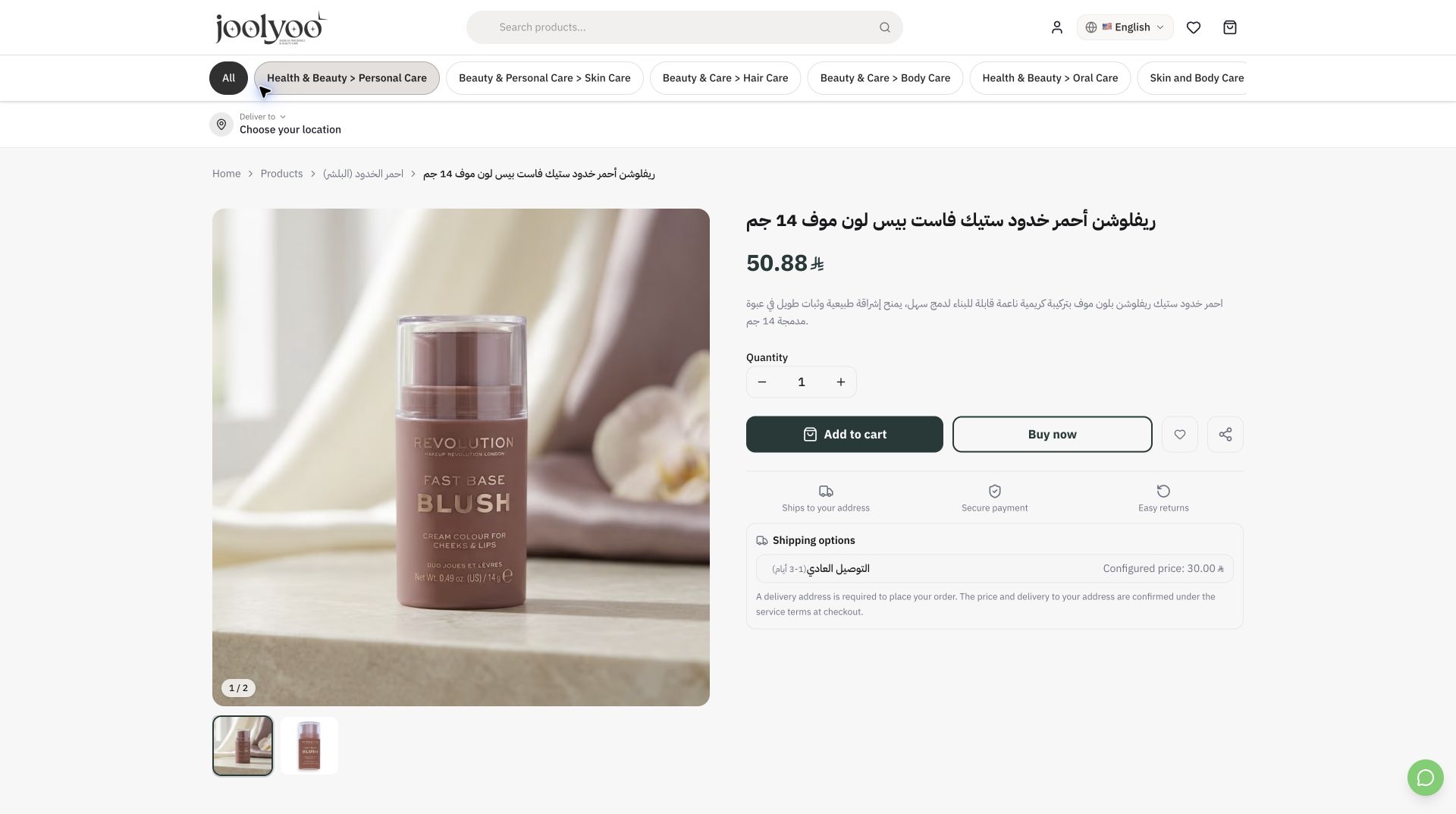
We opened the English version of the Revolution product page on Joolyoo on November 9, 2026. Interface buttons such as Add to cart and Shipping options switched to English, while the product title and description remained in Arabic. This is an observed testing fact demonstrating the distinction between storefront UI localization and catalog content translation.
This screenshot is not presented as a completed translation. Pre-publish QA must verify what the customer actually sees on the product page, not merely the presence of 'English' in the language switcher. Page content may change after the documentation date.
- Lock reference fields: Brand: Revolution, Line: Fast Base, Shade: Mauve, Weight: 14 g. These are suggested instructional equivalents for the displayed data, not content published on the page during the audit.
- Translate title, description, specifications, and image alt text while preserving numbers, units, and brand names.
- Check for leftover source-language text, variant names, and shipping policy copy, then re-open the public URL.
- Verify text direction, pricing, and button layouts on mobile. Complete text does not automatically guarantee correct rendering.
If a translation is incomplete, keep it in review rather than declaring full language coverage. When a source spec changes, re-review all linked localized versions so two shoppers never see conflicting details for the same item.
What must remain constant across languages?
Keep model numbers, item identifiers, dimensions, capacity, package contents, and verified safety warnings strictly consistent. Descriptive wording may adapt per language, but loose translation should never turn 'splash-resistant' into 'waterproof.' Decouple currencies and measurement units from text translation, and verify numerical conversions when needed rather than simply changing the symbol.
How do you implement this step by step?
- Build a single source of truth
For every SKU, consolidate non-negotiable attributes: material, dimensions, color, contents, country of origin, warranty, and warnings—along with the authoritative source for each value.
- Establish a store glossary
Standardize category names, colors, units, regulatory phrasing, and non-literal industry terms.
- Classify fields by risk level
Triage workflow into automated pass-through, conditional review, and mandatory human sign-off based on business impact and error reversibility.
- Test a single category first
Run the pipeline on 50 to 100 fully documented products, tracking turnaround time, error rates, and post-publish edits.
- Tie localization to performance outcomes
Monitor conversion rates by language, zero-result searches, and returns caused by mismatched expectations, and automatically reopen translations whenever a source attribute updates.
Example decision rationale
Example: A product labeled 'Pack of 6'. The pack count must stay clear in both languages and remain distinct from your store inventory of 20 packs. Mistranslating '6' as available stock can mislead buyer decisions and disrupt fulfillment.
Should keywords be translated literally?
Use terms your target audience naturally searches for while staying true to product facts. Adopt standard category and model terminology, but never alter brand names or insert unverified claims just to chase search traffic.
Related questions for your next step
What is the best next step?
Start with a documented product, then audit its languages. Use the example above to audit your data and setup, then review the right service for your business stage.
Explore the solution on Mollkom · Start with a documented SKU and review its languages
