

Start with authentic photos and verified data, then cross-check images and copy against color, form factor, dimensions, accessories, and specifications. Visual presentation and tone can be enhanced, but content must never fabricate a feature or make unverified claims. Maintain the original asset and audit generated outputs before publishing them across your catalog and campaigns.
How do we review a real example from catalog photography?
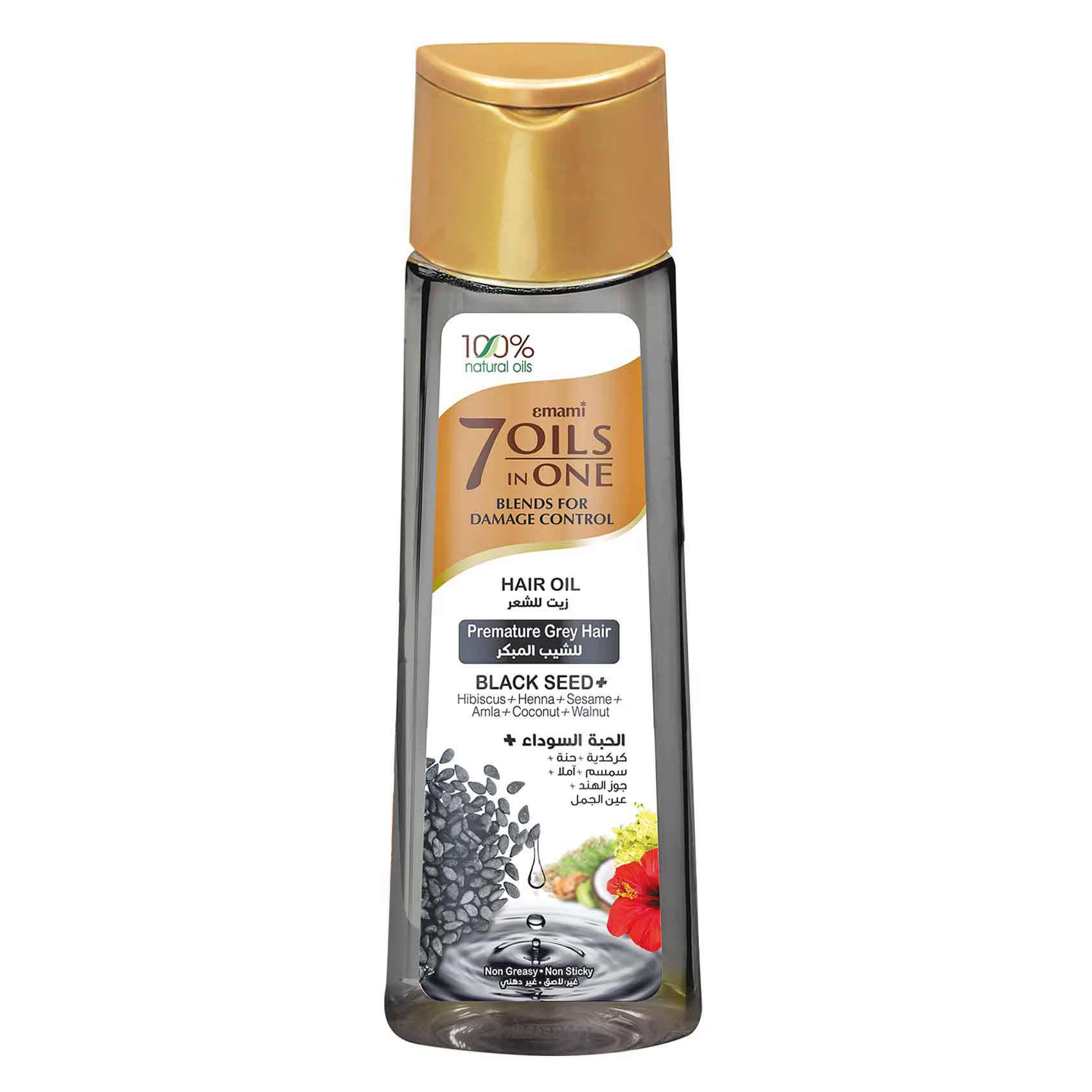
The image below shows Emami hair oil from the Joolyoo catalog assets displayed on Mollkom's website. The brand name and "7 Oils in One" text are clearly legible on the bottle. Use these exact details as a benchmark when comparing the source image against any generated variations; polished lighting can never excuse altered packaging or missing product claims.
- Compare cap design, labeling, colorway, and branding between the original and the output. If there is a material discrepancy, reject the asset for that product.
- Verify container volume from supplier records or legible packaging typography. If the volume is not clearly readable, never infer it from bottle height.
- Separate visible packaging text from unsubstantiated claims: on-pack copy does not substantiate medical efficacy or guaranteed results. Never introduce claims about reversing grey hair or specific timelines on your own.
- Inspect the image at full resolution and then at mobile card size; the product must remain clearly identifiable without cropped caps or cut-off bases.
Record review verdicts systematically: "Approved", "Needs clearer image", or "Data correction required", citing specific rationales. This makes quality assurance repeatable across large product batches rather than relying on subjective visual impressions.
What images and specifications should you prepare before generating assets?
Photograph the complete item under uniform lighting, capturing angles that display dimensions, included accessories, and label text. Map each image to its exact variant; an approximate color match is not a substitute SKU. Choose a clean white background for silhouette clarity, or a lifestyle backdrop when shoppers need functional context. Retain raw source files alongside approved assets to streamline audits when suppliers or packaging change.
How do you implement this step by step?
- Establish the single source of truth
Compile verified attributes, raw source imagery, ingredients or contents, safety warnings, and substantiation for performance claims. Assign an owner for missing fields.
- Define editing boundaries
Distinguish permitted enhancements (such as background cleanup, cropping, and lighting correction) from strictly prohibited alterations (such as changing color, material, silhouette, or ingredients).
- Generate strictly from verified inputs
Instruct the AI model to draw exclusively from the verified product record, flagging missing attributes for human clarification rather than hallucinating details.
- Audit for discrepancies
Run an independent check comparing outputs against raw sources to catch color shifts, scale distortions, phantom accessories, or unsupported claims.
- Approve and evaluate
Publish low-risk items once they pass automated checks, routing sensitive listings for human review. Monitor conversion lift alongside return reasons to identify misleading imagery.
Example decision rationale
Illustrative example: when preparing an image for a 350 ml mug, verify that the handle shape, packaging logos, and color match the physical product exactly. Never infer volume from photos, and never add unincluded accessories like a lid. If generation distorts lettering, revert to original photography or faithful touch-ups rather than publishing an inaccurate render simply because it looks appealing.
Should you review every image or is a sample enough?
Review every image before publishing it to the storefront, particularly product details and label typography. Spot-checking additional samples helps diagnose recurring pipeline flaws, but sampling alone does not make an inaccurate image acceptable to publish.
How do you audit descriptions and marketing claims alongside images?
Cross-reference every key claim against packaging or verified supplier sheets. Never infer active ingredients, warranties, or sensitive use cases from product photos alone. Distinguish internal pack counts from warehouse inventory, and flag missing specifications as open questions to resolve prior to launch. When a supplier or formulation changes, update both photos and copy simultaneously to eliminate legacy descriptions across channels.
Related questions for your next step
What is the best next step?
Start by auditing a product from your catalog. Use the example above to inspect your data and setup, then identify the right tier for your operational needs.
Explore the solution on Mollkom · Start by reviewing a product from your catalog
