
Publish publicly accessible product detail pages featuring accurate data on specs, pricing, availability, options, and shipping, linked with helpful category navigation and guides. Audit crawlability, indexation, and appropriate structured data, then evaluate organic traffic and completed orders. A Q&A format enhances readability when addressing genuine customer questions, but it does not guarantee high rankings or AI recommendations.
How do you audit a live product page from a shopper's perspective?
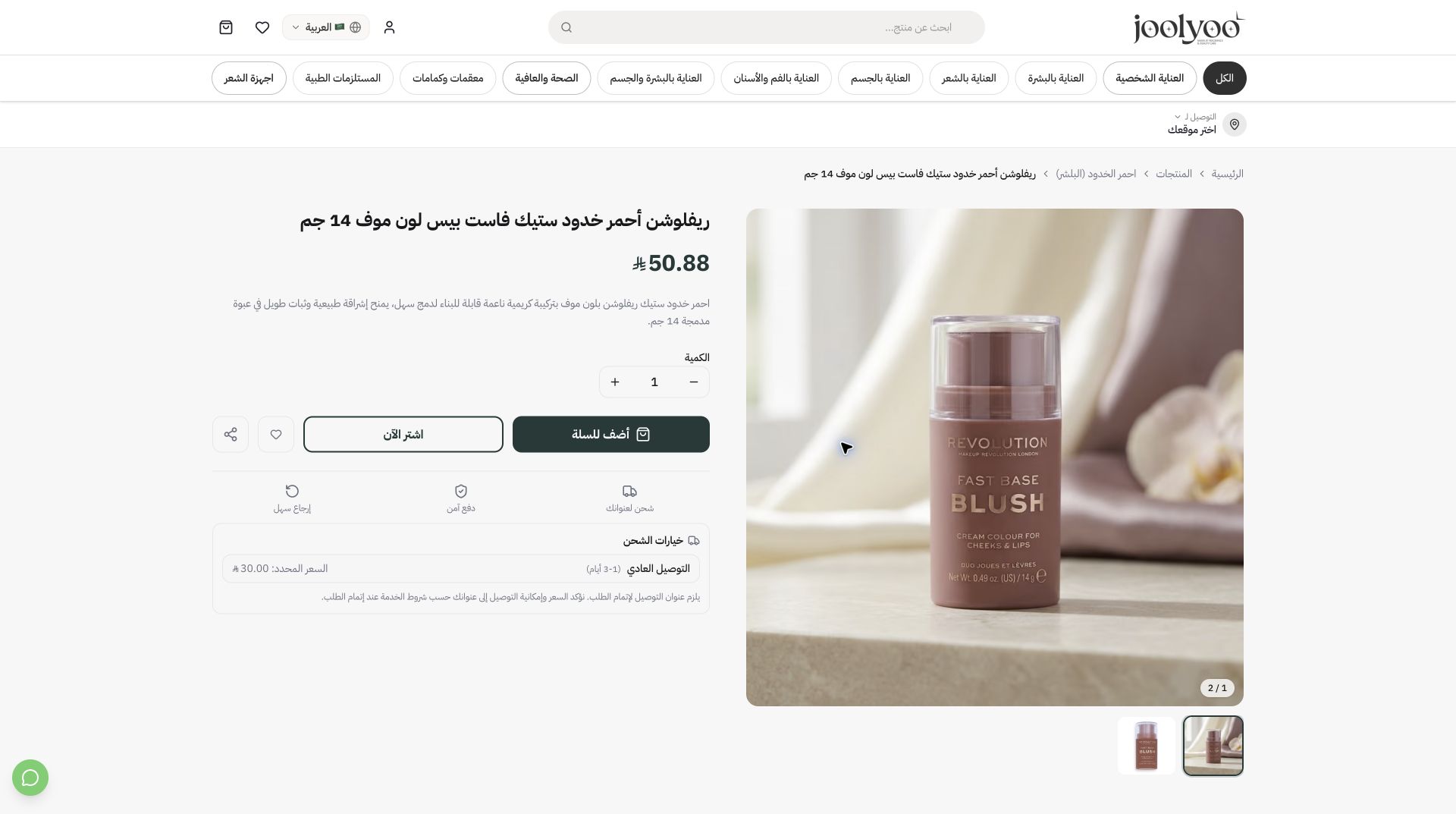
We audited the Revolution product page on Joolyoo on November 9, 2026. Visitors can view the item name, shade, 14 g net weight, imagery, price, and shipping options without signing into a merchant account. These details help shoppers evaluate the offer; however, the presence of this page does not prove that Google indexed it or that an AI assistant recommended it.
- Open the link as an anonymous visitor to confirm that the product title, shade name, and net weight are present in crawlable HTML text, rather than locked inside product images.
- Match product imagery and titles directly against catalog records. Product visuals must never depict different packaging or conceal selected variant options.
- Audit pricing, stock levels, and fulfillment details whenever product records change; outdated information harms checkout conversion even if the URL drives search visits.
- Inspect canonical tags, indexation status, and structured data schemas with standard SEO tools, then monitor Search Console. Viewing a page inside a browser does not verify search engine indexing.
- Isolate impressions, clicks, sign-ups, and completed transactions in your performance reporting. Referral sessions from an AI assistant do not guarantee paid customer conversions.
Ensure every extractable fact is clear, precise, and date-stamped when updated. When offering multi-language product listings, verify that the body copy is fully translated with matching specifications, rather than only translating interface buttons.
What core details do shoppers and search engines look for?
State the precise product title, what is included in the package, sizing, materials, compatibility, and contents where applicable. Ensure pricing, stock availability, and merchant policies match the checkout experience. Clarify variant differences and use genuine product photos.
Derive customer questions from sales inquiries and onsite search queries: Does this fit my model? What comes in the box? How do I choose my size? Answer SKU-specific questions right on the product page, and publish standalone buying guides when explanations apply across multiple products.
Do you need special formatting to surface in Google AI Overviews?
Google's published guidance confirms that core SEO practices and helpful, high-quality content remain effective for generative search features. Showcase authentic expertise and unique product details, and ensure pages are fully crawlable and indexable. Avoid keyword stuffing or splitting answers across duplicate URLs.
Phrasing headings as questions helps organize content logically. Lead with a concise answer, followed by actionable steps, a concrete example, and explicit limitations; reference official sources when citing external technical specifications or standards. Never present hypothetical scenarios as actual customer testimonials.
What technical checks should you perform on your store?
Confirm that product detail pages return proper HTTP status codes, that primary content renders for visitors, and that internal links and XML sitemaps point to canonical URLs. Monitor pages in Google Search Console to audit indexation health and resolve crawl errors.
Google outlines Product and Offer structured data requirements for merchant listing experiences. Schema markup must accurately reflect visible page content; never inject phantom ratings or unlisted prices. An editorial article does not become a product page simply by referencing a product name.
How should you manage AI assistant search crawlers?
Review robots.txt directives and firewall configurations with your technical team. OpenAI notes that OAI-SearchBot is used for surfacing websites in search, whereas GPTBot serves a distinct purpose. Permitting crawler access removes potential technical blockers, but it does not guarantee that AI models will cite your content.
Do not insert hidden prompts intended to bias AI models into endorsing your store. Transparent product specifications, up-to-date data, and authoritative references best serve both shoppers and automated comparison tools.
How can you tell if search visibility is driving real business?
Distinguish top-of-funnel impressions and clicks from cart additions, settled orders, and completed shipments. Inspect referrer channels where available, noting that some platforms strip tracking parameters and prevent exact attribution. Use meaningful comparative date ranges, and never credit sales growth to an isolated content update without auditing other variables.
Within Mollkom, you can generate product names, descriptions, and search metadata directly from structured catalog data, review them, and deploy them across your storefront, marketing workflows, and customer support. Enriching product data is a practical operational asset; it is not a guarantee of top Google rankings or universal inclusion in every AI engine.
References
External links and referenced documentation were reviewed on November 8, 2026. Review current platform documentation when provisioning your setup.
Related questions for your next step
What is the best next step?
Start with clear, auditable product pages. Use the example above to audit your data and setup, then review the right service for your business stage.
Explore the solution on Mollkom · Set up clear, audit-ready product detail pages

